 EN
EN

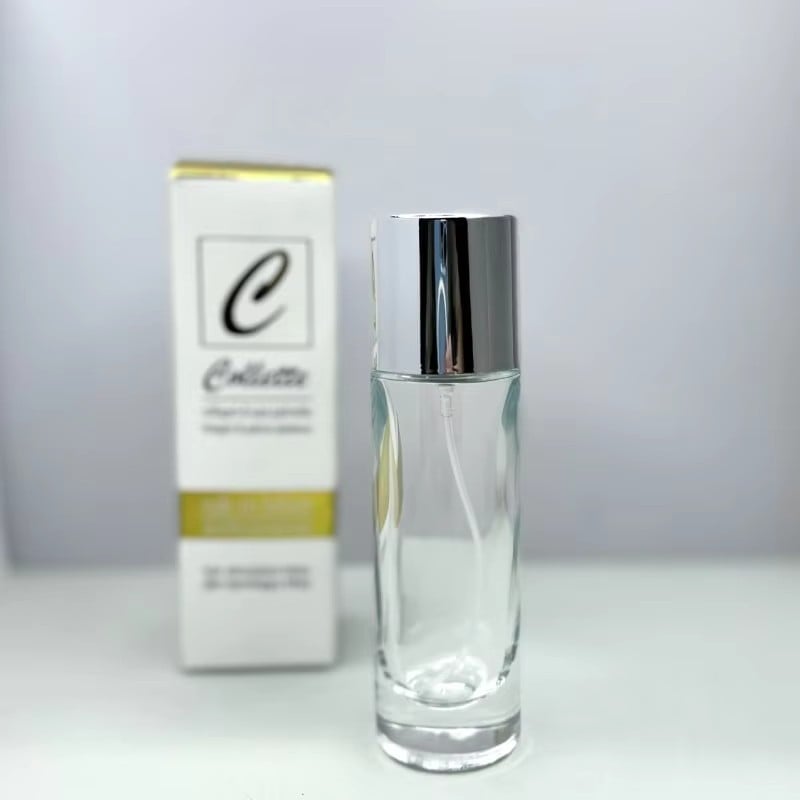
Chemical Inertness: Ensuring Fragrance Integrity in Perfume Bottles
How glass prevents degradation of volatile aromatic compounds
A perfume bottle serves as a micro-vault for a complex ethanol-based solvent system carrying hundreds of delicate volatile molecules. The primary packaging material must be chemically inert to preserve the perfumer’s intended olfactive architecture. Glass excels here due to its tightly bonded silicate network—an amorphous, non-porous structure that provides no catalytic sites or free ions capable of triggering oxidation or hydrolysis. This neutrality is critical for protecting highly labile compounds like aldehydes and citrus-derived monoterpenes, which rapidly degrade in reactive environments. A 2021 study by a leading fragrance research institute found that key monoterpenes stored in glass showed less than 2% compositional change after 12 months—significantly outperforming alternative containers. By acting not just as passive containment but as an active shield against molecular decomposition, glass preserves the fragrance’s original character, intensity, and longevity from first spray to last.
Plastic alternatives: leaching risks and scent distortion over time
Plastic alternatives—such as PET and PP—lack the molecular stability required for fine fragrance preservation. Their polymer chains contain free volume spaces that permit two-way molecular migration, directly compromising scent integrity. Leaching occurs when plasticizers, stabilizers, and residual monomers migrate into the ethanol solution, introducing off-odors and artificial notes. Simultaneously, sorption draws volatile top notes—like limonene and linalool—into the polymer matrix, irreversibly flattening the fragrance’s complexity. These processes accelerate with heat and time, permanently altering the scent profile. The contrast is definitive:
| Interaction Type | Glass Perfume Bottle | Plastic (PET/PP) Alternative |
|---|---|---|
| Molecular Migration | None (Absolute barrier) | High (Leaching & Sorption) |
| Fate of Top Notes | Fully preserved | Absorbed into polymer matrix, permanently lost |
| Long-Term Scent Impact | Maintains original designed profile | Distorted, flattened, with off-odors from plasticizer migration |
This inherent instability explains why premium fragrance houses universally select glass flacons—not as tradition, but as the only material proven to safeguard olfactory fidelity.
Impermeability: Superior Barrier Protection for Perfume Bottles
Zero oxygen transmission and UV resistance preserving volatility and top notes
Glass provides an absolute barrier to oxygen, making it uniquely suited to protect volatile top notes. Its dense, non-porous structure yields an oxygen transmission rate (OTR) of effectively zero—unmatched by even high-barrier plastics. This impermeability halts oxidative degradation that would otherwise dull citrus, aldehydic, and green accords. Tinted glass—especially amber or cobalt blue—adds critical UV protection, blocking photolytic cleavage of light-sensitive molecules. Together, these properties ensure that top notes retain their lift and brightness for years, delivering consistent olfactory performance from first use to final drop.
Glass vs. PET/PP: OTR comparison and real-world shelf-life implications
| Material | Oxygen Transmission Rate (cc/m²/day) | Typical UV Barrier | Estimated Top Note Retention After 2 Years |
|---|---|---|---|
| Glass | 0.0 | Excellent (when tinted) | ≥ 95% |
| PET | 1.5–2.5 | Moderate | ~70% |
| PP | 3.0–5.0 | Low | ~50% |
Industry barrier studies (2022) confirm that even coated PET allows sufficient oxygen ingress to oxidize volatiles within 12–18 months, resulting in perceptible loss of freshness. Real-world shelf-life testing shows perfumes in glass retain full olfactory integrity beyond five years, while those in plastic develop off-notes and diminished sillage. This durability translates directly to reduced waste, fewer customer returns, and sustained brand equity for fragrance houses committed to long-term olfactory excellence.
Luxury Perception and Design Flexibility Unique to Perfume Bottles
Optical clarity, weight, and refractive index elevating brand prestige
Glass transforms the perfume bottle into a tactile and visual emblem of luxury. Its optical clarity reveals the fragrance’s true hue—activating sensory anticipation before the cap is even lifted. Its substantial weight conveys craftsmanship and permanence; tactile research confirms consumers associate heft with quality and value, supporting premium pricing strategies. With a refractive index near 1.5, glass bends and amplifies light in ways plastics cannot replicate—creating sparkle, depth, and dimensionality on retail shelves. Designers leverage these intrinsic qualities: thick bases diffuse light, curved walls enhance ergonomics, and precision-cut facets elevate perceived artistry. The result is functional packaging reimagined as a collectible object—one that communicates opulence through material truth, not surface embellishment.
Sustainability Advantages of Glass Perfume Bottles Across the Lifecycle
High recyclability rates and circular economy alignment vs. composite plastics
Glass offers unmatched sustainability credentials through infinite recyclability. It can be remelted endlessly without quality loss, and approximately 80% of recovered glass is remanufactured into new containers—making it a cornerstone of the circular economy. Incorporating recycled cullet reduces manufacturing emissions by roughly 30% compared to virgin raw materials (FEVE, 2022). In stark contrast, composite plastic perfume bottles—often layered with metallized films or mixed polymers—are notoriously difficult to sort and process. Industry data shows they achieve only about a 9% recycling rate, with most ending up incinerated or landfilled (Plastics Europe, 2022). Glass bottles also support reuse: consumers frequently repurpose them as decorative vessels or refillable containers, extending utility beyond initial use. Lifecycle assessments consistently rank mono-material glass as the superior sustainable choice for luxury fragrance—driving a growing industry shift toward designs engineered for perpetual cycling.
FAQ
Why is glass the preferred material for perfume bottles?
Glass is chemically inert, non-porous, and provides an absolute barrier against oxygen, UV light, and molecular migration, ensuring the fragrance's scent integrity, longevity, and quality.
What are the risks of using plastic perfume bottles?
Plastic bottles can leach chemicals, absorb volatile top notes, and allow oxygen ingress, which can result in scent distortion, off-odors, and reduced perfume quality over time.
Can glass perfume bottles be recycled?
Yes, glass perfume bottles are infinitely recyclable without quality loss, making them a sustainable choice aligned with the circular economy.
How does glass preserve top notes better than plastics?
Glass has an oxygen transmission rate (OTR) of zero and offers superior UV protection, which prevents oxidative degradation and photolytic damage to volatile top notes.
Is glass considered environmentally friendly compared to plastics?
Yes, glass is more environmentally friendly due to its high recyclability rates, reduced manufacturing emissions when recycled cullet is used, and its ability to be reused or repurposed by consumers.