 EN
EN

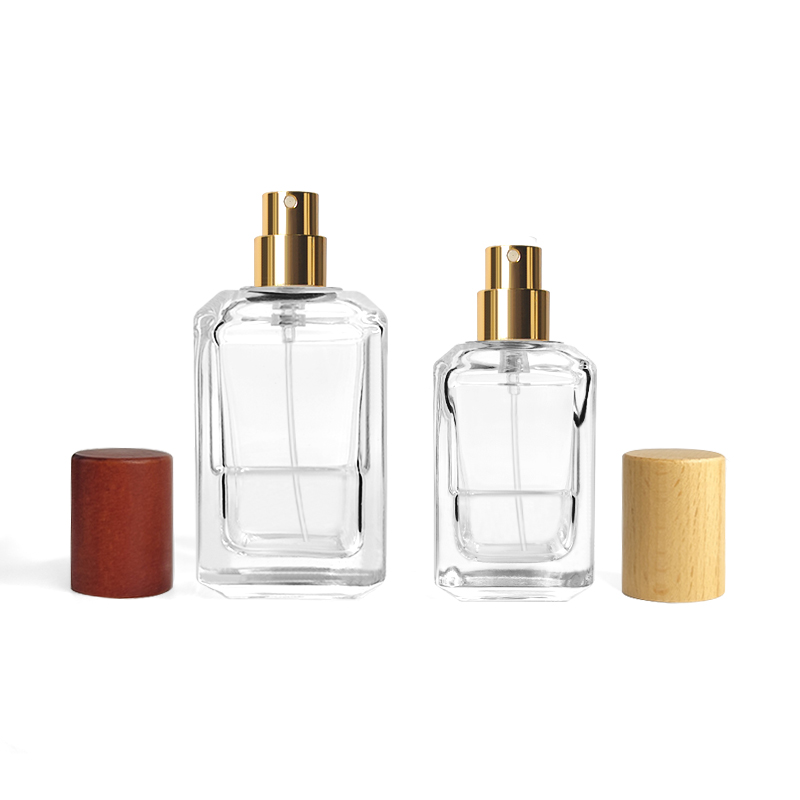
Frosted Glass Treatments for Premium Perfume Bottles: Balancing Aesthetics and Longevity
Acid Etching vs. Sandblasting: Scratch Resistance and Ethanol Stability in Perfume Bottle Applications
Acid etching creates a chemically bonded, pore-free matte finish that integrates fully with the glass substrate—forming a monolithic layer far more resistant to micro-scratches than mechanically abraded surfaces. Sandblasting, by contrast, erodes the surface, leaving microscopic pits that trap ethanol-based fragrance residues; repeated evaporation cycles can initiate stress fractures, leading to clouding or structural weakening over time. Accelerated ethanol-immersion testing shows acid-etched panels sustain less than 2% surface degradation after 500 hours, while sandblasted samples often exhibit visible hazing and a 15–20% gloss loss. This chemical stability prevents leaching and preserves optical clarity throughout the fragrance’s shelf life—making acid etching the benchmark for luxury brands prioritizing both refined tactile appeal and enduring integrity.
Matte Coatings on Glass Perfume Bottles: Adhesion Integrity Under Repeated Alcohol Exposure
Matte polymer coatings on glass perfume bottles fail most frequently at the coating-to-glass interface, where ethanol molecules penetrate microscopic gaps and swell the film—gradually undermining adhesion. Without rigorous surface preparation—such as flame treatment or silane priming—delamination typically begins at high-stress zones like the rim or base, compromising both aesthetics and seal integrity. High-performance UV-cured matte systems overcome this by forming covalent bonds with pre-treated glass, resisting alcohol-induced plasticization. Cyclic dip-and-dry testing confirms optimized formulations retain over 98% adhesion after 1,000 ethanol exposure cycles—versus as low as 70% for uncured alternatives. Leading manufacturers therefore mandate controlled application environments and post-cure annealing to ensure the finish withstands decades of alcohol contact and routine handling without degradation.
Metal Component Protection: Electroplating and Topcoats for Perfume Bottle Caps and Accents
Electroplating transforms lightweight base metals—like zinc alloy or brass—into premium caps and accent collars, delivering high-perceived-value finishes such as mirror-bright chrome or warm rose gold. Yet the plated layer alone offers minimal resistance to ethanol; unprotected surfaces are vulnerable to micro-etching, haze, and color shift. A protective topcoat is not optional—it’s essential for long-term durability.
Electroplated Finishes (Chrome, Rose Gold) with UV-Cured Varnish: Alcohol Resistance and Shelf-Life Performance
A UV-cured varnish applied immediately after plating forms a chemically inert barrier that halts ethanol penetration. In controlled testing, chrome-plated brass caps coated with a 15-µm UV-cured acrylic varnish showed less than 2% gloss reduction after 2,000 hours of intermittent ethanol vapor exposure (Packaging Technology Research, 2022). Rose gold finishes—dependent on precise alloy composition—benefit even more: the varnish locks in hue fidelity and prevents copper-rich tones from oxidizing. It also significantly improves scratch resistance, critical for caps subjected to repeated twisting. Formulated photoinitiators enable full crosslinking in seconds under targeted UV wavelengths—ensuring compatibility with high-speed production while delivering a finish that retains its luxury appearance across the product’s entire shelf life.
Failure Analysis: Uncoated Plating Degradation in Real-World Perfume Bottle Storage Conditions
Omitting the topcoat invites rapid, real-world failure. In fluctuating bathroom or retail display environments, uncoated electroplated caps often degrade within weeks. Ethanol vapors infiltrate porous plating layers, triggering galvanic corrosion between the decorative metal and underlying substrate. A 2021 study documented visible white corrosion spots on uncoated chrome-plated zinc caps after just 72 hours of exposure to 70% ethanol vapor at 40°C (Journal of Cosmetic Science, 2021). Field returns confirm the consequences: peeling, pitting, and tactile roughness that directly undermine brand perception. Worse, loosened plating particles risk contaminating the fragrance—potentially triggering costly recalls. The evidence is unequivocal: the UV-cured varnish topcoat separates durable luxury assets from warranty liabilities.
Advanced Polymer Coatings: UV-Cured Lacquers and Spray Systems for Multi-Material Perfume Bottles
Performance Comparison: UV-Curable Coatings on Glass, PETG, and Aluminum Perfume Bottle Substrates
Adhesion and chemical resistance vary markedly across substrates—and demand tailored surface strategies. Glass achieves robust bonding via silane-modified formulations; PETG requires plasma pretreatment to prevent ethanol-induced delamination; aluminum needs an anti-corrosion primer to inhibit under-film oxidation. Recent advances—such as replacing 15% of standard resin with Polyester Acrylate B—enhance scratch resistance without compromising UV stability. When properly cured and prepared, coatings on glass and treated PETG show no blistering or softening after 30 days of continuous ethanol immersion. Untreated aluminum, however, fails within 48 hours—highlighting how substrate-specific preparation dictates performance.
Curing Parameters and Environmental Impact: Optimizing Hardness and VOC Compliance for Perfume Bottle Production
Thorough, uniform curing is non-negotiable. Advanced photoinitiator blends ensure complete surface and through-cure at UV doses of 1300–1350 mJ/cm²—achieving optimal crosslink density without brittleness or thermal stress cracking. As 100% solids systems, UV-curable lacquers emit zero VOCs, meeting stringent global air-quality standards—including EU REACH and California’s SCAQMD Rule 1168. This eliminates solvent recovery infrastructure, reduces energy use versus thermal ovens, and lowers overall carbon intensity. Nanocomposite additives further elevate surface hardness while preserving flexibility—enabling both durability and high-line-speed application. Collectively, these attributes position UV-cured systems as the most sustainable and technically resilient choice for premium perfume bottle finishing.
Foundational Surface Preparation: The Critical First Step for Durable Perfume Bottle Finishes
No finish—whether frosted glass, electroplated metal, or polymer coating—can outperform its foundation. Residues from mold release agents, polishing compounds, or ambient contaminants can reduce adhesion strength by over 40%, precipitating premature peeling, blistering, or corrosion. A rigorously validated multi-stage cleaning process—typically combining alkaline degreasing, deionized water rinsing, and plasma or flame activation—removes organic films and elevates surface energy, enabling uniform wetting and bonding of subsequent layers. Even on glass, cleaning exposes reactive silanol groups that facilitate covalent bonding with organosilane adhesion promoters—a step proven to dramatically improve ethanol resistance and mechanical durability. Skipping this phase virtually guarantees failure—regardless of coating sophistication. In premium packaging, surface preparation isn’t preparatory—it’s the cornerstone of longevity.
FAQ
1. What is the difference between acid etching and sandblasting for glass perfume bottles?
Acid etching creates a chemically bonded, smooth finish that resists scratches better than sandblasting, which leaves microscopic pits that can lead to clouding and weakening over time.
2. Why is a protective topcoat necessary for electroplated perfume bottle components?
Topcoats provide a barrier against ethanol penetration, preventing corrosion, discoloration, and surface degradation, ensuring long-term durability and luxury appearance.
3. How does surface preparation affect perfume bottle finishes?
Surface preparation removes contaminants and increases adhesion strength, forming a critical foundation for durable and resistant finishes on glass and metal components.
4. Are UV-cured coatings environmentally friendly?
Yes, UV-cured coatings emit zero VOCs, comply with global air-quality standards, and reduce energy consumption, making them a sustainable choice for finishing perfume bottles.
5. How do polymer coatings on glass perfume bottles withstand alcohol exposure?
UV-cured polymer coatings form strong bonds and resist ethanol plasticization, retaining their integrity and appearance even after repeated exposure cycles.
Table of Contents
- Frosted Glass Treatments for Premium Perfume Bottles: Balancing Aesthetics and Longevity
- Metal Component Protection: Electroplating and Topcoats for Perfume Bottle Caps and Accents
- Advanced Polymer Coatings: UV-Cured Lacquers and Spray Systems for Multi-Material Perfume Bottles
- Foundational Surface Preparation: The Critical First Step for Durable Perfume Bottle Finishes
- FAQ