 EN

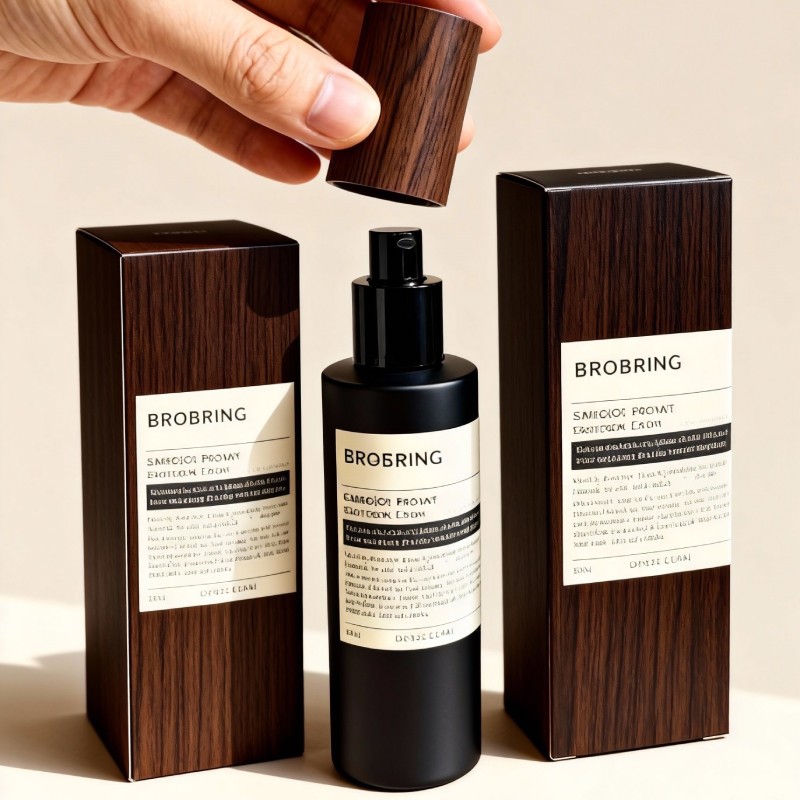
Primary Bottle Body Materials: PET vs. HDPE for Impact, Chemical, and Cycle Durability
For a daily-use pump bottle, body material determines impact resistance, chemical compatibility, and repeated actuation life.
PET’s clarity, rigidity, and resistance to common liquids (e.g., hand sanitizers, toners)
PET (Polyethylene Terephthalate) is a rigid, glass-clear thermoplastic that delivers premium aesthetics while safely holding thin, alcohol-based formulas like hand sanitizers and toners. Its stiff wall structure minimizes squeezing during dispensing—supporting consistent vacuum formation and dose accuracy. PET also offers low moisture and oxygen permeability, helping ethanol and aqueous actives retain potency over typical shelf life. However, PET is more brittle than HDPE under impact, especially at thread junctions and base corners. It performs best with neutral-to-mildly acidic formulations and alcohol concentrations within standard formulation ranges. For high-clarity bottles requiring dimensional stability and gloss, PET remains a trusted choice.
HDPE’s toughness, UV stability, and superior resistance to household cleaners and abrasion
HDPE (High-Density Polyethylene) is an opaque, impact-resistant thermoplastic ideal for aggressive daily use. Its molecular structure provides strong resistance to acids, alkalis, surfactants, and common household cleaners—including diluted bleach and degreasers—without stress cracking or softening. HDPE maintains structural integrity at higher continuous-use temperatures than PET, reducing warping risk near heat sources or during warm-water rinses. When formulated with UV stabilizers, it retains color and mechanical properties under bright retail or bathroom lighting. Though its softer surface absorbs scratches rather than cracking, this can reduce visual appeal on high-gloss decorative finishes. Where clarity is secondary to durability and chemical resilience, HDPE is the preferred body material.
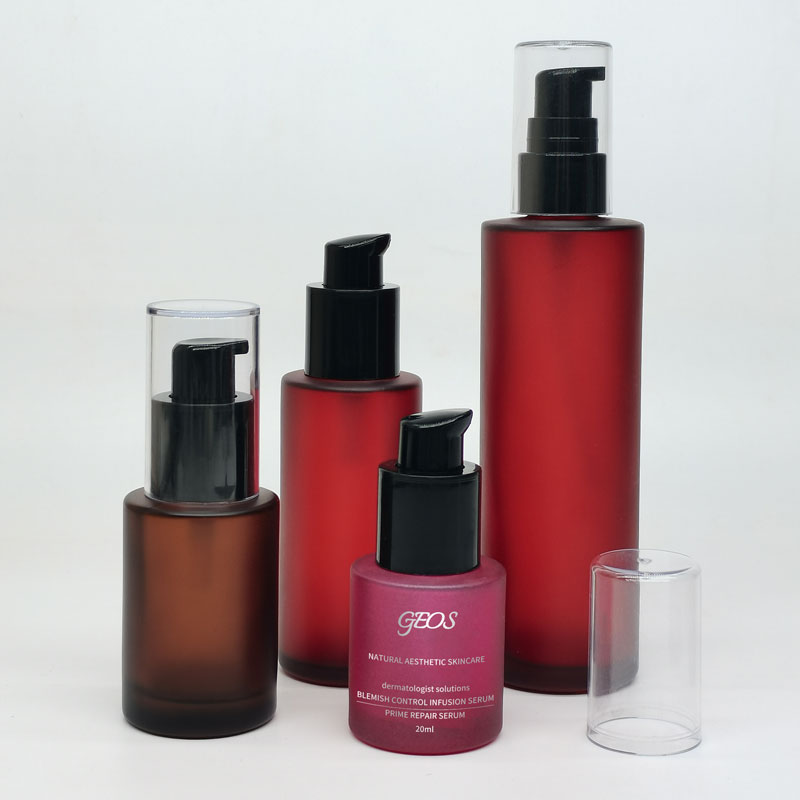
Performance comparison: 5,000+ actuation cycles, drop testing, and real-world shelf-life data
Material selection directly influences failure mode over extended use. PET retains tight collar tolerances, preserving dosing consistency across 5,000+ actuations—but overtightening may induce thread stress cracking. HDPE flexes slightly per stroke, lowering localized stress; however, its collar design must be reinforced to prevent fatigue-related loosening. Drop testing confirms HDPE absorbs impact through shallow dents and scuffs, whereas PET may crack at sharp corners or near the neck. In real-world shelf life, PET maintains transparency and barrier performance for visible, moisture-sensitive formulas; HDPE excels in opaque packaging exposed to frequent handling and harsher chemical environments.
| Test condition | PET body behavior | HDPE body behavior |
|---|---|---|
| 5,000+ actuation cycles | Retains shape and dose consistency; may stress crack at threads if overtightened | Flexes without cracking; needs secure collar design but resists fatigue well |
| Drop testing | Rigid and clear; can crack on hard impact at corners or neck | Absorbs impact with dents and scuffs; less likely to crack or split |
| Household chemical exposure | Good for hand sanitizers, toners, and mild acids; avoid strong alkalis and solvents | High resistance to cleaners, degreasers, acids, and diluted bleach |
| Real-world shelf life | Maintains clarity and barrier; may yellow slightly under prolonged UV | Opaque and color stable; UV-stabilized grades resist outdoor or bright-light aging |
For sustained daily use, both materials support thousands of pump cycles—but PET prioritizes clarity and precision, while HDPE prioritizes impact survival and aggressive chemical resistance.
Pump Mechanism Components: Polypropylene, POM, and ABS for Fatigue Resistance and Precision Function
Polypropylene (PP) in Collars and Triggers: Heat Tolerance and Long-Term Flexural Endurance
Polypropylene (PP) is the industry-standard material for pump collars and triggers due to its exceptional fatigue resistance and thermal stability. With a heat deflection temperature near 100°C at 0.45 MPa, PP remains dimensionally stable during warm-fill processes and daily exposure to heat-prone environments. Its living-hinge capability enables reliable flexing over thousands of actuations without crack propagation, while its low-friction surface ensures smooth trigger return. PP resists alcohols, surfactants, and weak acids—preserving snap-back force and structural integrity throughout product life. Though less rigid than POM, PP’s balanced flexibility and strength make it ideal where repeated bending—not micron-level precision—is the functional priority.
POM (Acetal) and ABS in Plungers, Springs, and Actuators: Strength, Dimensional Stability, and Recyclability Limits
POM (polyoxymethylene) and ABS serve critical load-bearing roles inside the pump mechanism. POM delivers tensile strength of 60–70 MPa, low friction, and outstanding dimensional stability—making it optimal for plungers, cams, and valve stems that must sustain tight tolerances across repeated cycles. ABS contributes impact resistance and shock absorption in actuator buttons and snap-fit housings, particularly during drop events. However, both present end-of-life challenges: POM’s dense crystalline structure impedes separation in mixed plastic recycling streams, and ABS requires dedicated styrenic recovery infrastructure rarely available in curbside programs. Designers should specify these engineering resins only where performance justifies the recyclability trade-off—and avoid combining them with incompatible polymer labels.
Sealing Systems: Silicone and TPE Gaskets for Leak-Proof, Long-Lasting Pump Bottle Performance
A reliable pump bottle depends on the neck finish seal to maintain dose accuracy and prevent leakage during daily use, shipping, and temperature swings. Two material families dominate high-performance gasket design: silicone and thermoplastic elastomers.
| Property | Silicone gasket | TPE gasket |
|---|---|---|
| Compression set | Below 20% after 22 h at 100°C | 30–50% after 22 h at 70°C |
| Chemical compatibility | Ethanol, glycols, surfactant-rich formulas | Mild cleansers, lotions, diluted surfactants |
| Temperature range | -50°C to 200°C | Typically -30°C to 80°C |
| Cost and processing | Higher cost; LSR or molded silicone | Lower cost; injection moldable and overmoldable |
Silicone’s compression set retention and compatibility with ethanol, glycols, and surfactants
Silicone gaskets are the gold standard for ethanol-based sanitizers, toners, glycols, and surfactant-heavy formulas. Their exceptionally low compression set—typically below 20% after 22 hours at 100°C—ensures long-term sealing force retention, minimizing air ingress and maintaining dose consistency. Silicone remains flexible across extreme temperatures (–50°C to 200°C), resisting hardening or embrittlement during hot warehouse storage or freezing transport. While more expensive than TPE and susceptible to swelling in non-polar oils, silicone’s performance in polar and alcohol-based systems makes it the most reliable seal for demanding personal care applications.
Thermoplastic elastomers (TPE) as cost-effective, moldable alternatives with balanced sealing and resilience
Thermoplastic elastomer gaskets offer a scalable, cost-efficient alternative for mid-tier pump bottles. TPEs can be co-molded or overmolded directly onto polypropylene collars—reducing part count, assembly steps, and production complexity. Though their compression set (30–50% after 22 hours at 70°C) is higher than silicone’s, TPE gaskets still deliver leak-proof performance with diluted cleansers, lotions, and mild surfactants under normal use conditions. Choose TPE when cost efficiency, design flexibility, and compatibility with PP-based mono-material recycling are priorities. Avoid TPE in high-ethanol or solvent-heavy formulations, where silicone remains the only proven long-term solution.
Design-Driven Material Selection: Balancing Durability, Sustainability, and Pump Bottle Functionality
Material selection for a durable pump bottle extends beyond individual resin properties—it’s about aligning body, mechanism, and seal into a cohesive system that performs reliably under real-world stress. PET and HDPE bodies must match the chemical profile of the formula to prevent cracking, haze, or seal failure. Likewise, PP, POM, and ABS components should be chosen for fatigue resistance and dimensional stability—not just cost—especially in high-frequency personal care and home care applications. Finally, silicone or TPE gaskets complete the system by preserving sealing integrity across thermal shifts, repeated compression, and long shelf life.
From a sustainability perspective, intentional material choices enhance both service life and end-of-life outcomes. Mono-material constructions—such as PP-only pumps paired with HDPE or PET bodies—simplify sorting and improve recyclability. Refillable formats and strategic lightweighting (maintaining wall thickness at stress points like threads and bases) further reduce environmental impact without compromising drop-test performance or actuation longevity. Ultimately, the most resilient pump bottle emerges from a balanced strategy: matching each component to its functional imperative—chemical resistance, mechanical endurance, or sealing resilience—rather than forcing a single material to fulfill every role.
FAQ Section
What is the main difference between PET and HDPE in pump bottles?
PET offers superior clarity, rigidity, and low permeability, making it ideal for holding alcohol-based or moisture-sensitive formulas, while HDPE provides better impact resistance, UV stability, and chemical compatibility, especially for aggressive cleaners and household use.
Which material is better for a high-use environment?
HDPE is generally better for high-use environments due to its durability, impact resistance, and resistance to household cleaners. However, PET may be preferred for high-clarity aesthetic purposes and stability of alcohol-based solutions.
What is the role of Polypropylene (PP) in pump bottles?
PP is primarily used in collars and triggers due to its high fatigue resistance, thermal stability, and smooth low-friction surface, making it ideal for components that experience repeated bending and flexing.
Why are silicone gaskets preferred over TPE gaskets?
Silicone gaskets are preferred for ethanol-based and surfactant-heavy formulas due to their low compression set, wide temperature resistance range, and superior sealing properties. TPE gaskets, while more cost-effective, may not perform as well in high-ethanol or solvent-heavy environments.
How can sustainability be improved in pump bottle design?
Sustainability can be improved by opting for mono-material construction, refillable formats, and lightweight designs. Using recyclable materials like PP and HDPE also enhances sorting and recycling efficiency at the product's end of life.
Table of Contents
- Primary Bottle Body Materials: PET vs. HDPE for Impact, Chemical, and Cycle Durability
- Pump Mechanism Components: Polypropylene, POM, and ABS for Fatigue Resistance and Precision Function
- Sealing Systems: Silicone and TPE Gaskets for Leak-Proof, Long-Lasting Pump Bottle Performance
- Design-Driven Material Selection: Balancing Durability, Sustainability, and Pump Bottle Functionality
- FAQ Section