 EN
EN

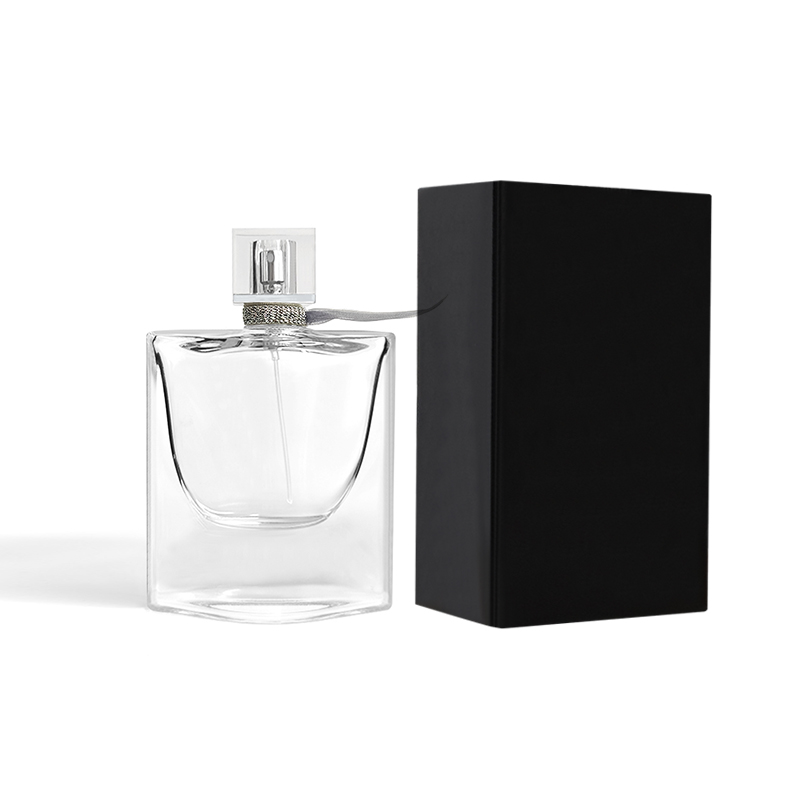
Material Safety and Chemical Compatibility for Perfume Bottle Integrity
Glass Purity, Heavy Metal Limits, and Fragrance Stability Testing
Glass remains the gold standard for perfume packaging due to its exceptional chemical inertness—yet performance hinges on raw material purity. Iron content, in particular, must be tightly controlled: excess iron not only imparts a greenish tint but also introduces reactive sites that can catalyze oxidation or degradation of fragrance oils and ethanol. High-purity soda-lime or borosilicate glass—verified through elemental analysis—ensures optical clarity and long-term stability. To validate compatibility, bottles are filled with the actual fragrance formulation and subjected to accelerated aging (30–90 days at elevated temperature and humidity). Success rates for detecting incompatibility via this protocol stand at 85–92%, per 2023 industry benchmarking data. Post-test evaluation assesses container integrity (discoloration, corrosion, microfractures) and fragrance fidelity (olfactory profile, color shift, viscosity change)—a critical safeguard against post-launch quality failures.
UV-Protective Glass Requirements and Migration Risk Assessment (EU REACH & FDA CFR 21)
UV radiation accelerates the breakdown of delicate aromatic compounds, directly compromising shelf life and olfactory accuracy. Amber or cobalt blue UV-absorbing glass is therefore not merely aesthetic—it’s a functional requirement, filtering >95% of UVA/UVB wavelengths to preserve molecular integrity. Equally vital is migration control. Under EU REACH and FDA CFR 21 regulations, manufacturers must conduct rigorous migration risk assessments to confirm no extractable substances—from glass additives, coatings, or secondary seals—leach into the formulation over time. Unlike plastics, high-quality glass poses negligible migration risk, eliminating concerns about plasticizer contamination. Validated migration testing simulates worst-case contact conditions (e.g., prolonged storage at elevated temperatures), ensuring the bottle functions as a true inert barrier—protecting both consumer safety and the fragrance’s original sensory character.
Precision Engineering and Seal Performance for Perfume Bottle Functionality
The functional integrity of a glass perfume bottle is defined by micron-level engineering precision—not just visual appeal. For wholesale empty bottles to reliably contain and dispense volatile fragrance formulations, neck finish geometry, dimensional consistency, and closure interface must operate as a unified, high-tolerance system. A single deviation can trigger leakage, pump misalignment, or consumer dissatisfaction. Buyers accordingly prioritize suppliers who demonstrate verifiable adherence to international standards and employ scientific seal validation—not just cosmetic inspection.
Dimensional Tolerances: Neck Diameter, Shoulder Alignment, and Base Flatness (ISO 8594)
The bottle-to-pump interface is the most sensitive functional zone. Even ±0.2 mm deviation in neck diameter can prevent proper crimp formation, resulting in an insecure primary seal. Leading suppliers control three interdependent parameters per ISO 8594:
- Neck inner and outer diameter: Ensures consistent mechanical engagement between the pump’s crimp collar and glass, generating the required sealing force.
- Verticality and shoulder alignment: A perpendicular neck-to-shoulder angle prevents tilted sprayer insertion—critical for even atomization and leak-free operation.
- Base flatness: Enables stable positioning on high-speed filling and capping lines; any rocking motion risks angled pump placement, damaging components and compromising the seal.
These dimensions are verified using calibrated optical comparators—not manual gauges—ensuring batch-wide conformity to design specifications.
Airtight Seal Validation: Vacuum Decay vs. Helium Tracer Leak Testing
Leakage remains the top cause of fragrance-related consumer complaints—often stemming from undetected micro-defects in the crimp or pump assembly. Basic water immersion tests lack sensitivity; instead, leading suppliers deploy two complementary, non-destructive methods:
| Testing Method | Principle | Detection Capability | Best Use Case |
|---|---|---|---|
| Vacuum Decay | Sealed bottle placed in vacuum chamber; pressure rise measured over time. | Medium to large leaks (down to ~10⁻³ mbar·L/s). | High-speed inline sampling (e.g., AQL-based production line checks). |
| Helium Tracer Leak | Helium introduced either inside or around sealed bottle; escaping atoms detected via mass spectrometer. | Ultra-fine leaks (down to ~10⁻⁹ mbar·L/s). | Design validation, crimpless pump qualification, and root-cause analysis. |
While vacuum decay supports efficient process monitoring, helium tracer testing delivers definitive evidence of seal reliability—especially for high-risk configurations. Robust QA programs further require durability validation: pumps must maintain seal integrity across ≥5,000 actuations without measurable leakage. This layered approach ensures contents remain intact from filling line to end use.
Durability and Structural Reliability of Perfume Bottle Packaging
Impact Resistance, Thermal Shock, and Edge Strength Metrics (ISTA 3A & ASTM D1002)
Luxury fragrance packaging must withstand real-world logistics—not just lab conditions. ISTA 3A testing replicates drop, vibration, and compression forces encountered during shipping and warehousing, verifying structural resilience under dynamic stress. Thermal shock resistance is equally essential: rapid temperature shifts (e.g., warehouse to retail environment) can induce microcracks or accelerate leaching if glass composition or annealing is suboptimal. Standardized thermal cycling protocols confirm stability across -20°C to +60°C ranges. Edge strength—particularly at the neck and base—is quantified per ASTM D1002, measuring the lap shear strength of bonded assemblies like crimped collars or spray mechanisms. Consistently meeting these metrics reduces field failure rates, preserving both product integrity and brand equity.
Regulatory Compliance and Quality Assurance in Perfume Bottle Manufacturing
ISO 9001 Integration with Statistical Process Control (SPC) for Consistent Output
True consistency in perfume bottle manufacturing arises from the integration of ISO 9001’s documented quality management framework with real-time Statistical Process Control (SPC). SPC continuously monitors critical variables—neck bore diameter, wall thickness, annealing temperature—using automated sensor data to detect process drift before defects occur. This proactive control enables tighter tolerances and lower scrap rates. When paired with ISO 9001’s traceability and corrective action requirements, the result is stable, repeatable output: every bottle meets precise dimensional and material specs required for reliable pump integration and fragrance preservation.
Multi-Stage Inspection: Automated Vision + AQL Sampling (ISO 2859-1 Level II)
Final quality assurance combines 100% automated inspection with statistically grounded sampling. High-resolution vision systems scan every bottle for surface flaws, micro-cracks, and neck finish anomalies at line speed. Complementing this, Acceptable Quality Limit (AQL) sampling per ISO 2859-1 Level II provides objective, risk-adjusted batch acceptance criteria—typically AQL 0.65 for major defects in cosmetic-grade production, meaning fewer than 0.65% defective units are statistically acceptable. This dual-layer strategy balances comprehensive defect detection with operational efficiency, meeting the uncompromising quality expectations of global fragrance brands.
FAQs
- Why is glass preferred for perfume packaging? Glass offers exceptional chemical inertness, protecting fragrances from degradation.
- How does UV-protective glass preserve fragrance? UV-absorbing glass (amber or cobalt blue) filters out damaging UVA/UVB wavelengths, maintaining molecular integrity.
- What is migration testing, and why is it important? Migration testing ensures no extractable substances from the glass affect fragrance formulations over time.
- What causes perfume bottle leakage during use? Leakage often stems from defects in the seal or pump assembly, requiring precise engineering and validation.
- How is bottle durability validated? Durability tests simulate real-world conditions like shipping, temperature shifts, and impact, ensuring packaging resilience.
- What standards govern dimensional tolerances? ISO 8594 defines neck diameter, shoulder alignment, and base flatness for reliable pump integration.
- How does ISO 9001 ensure quality in manufacturing? ISO 9001 integrates quality management principles with Statistical Process Control for consistent production output.