 EN
EN

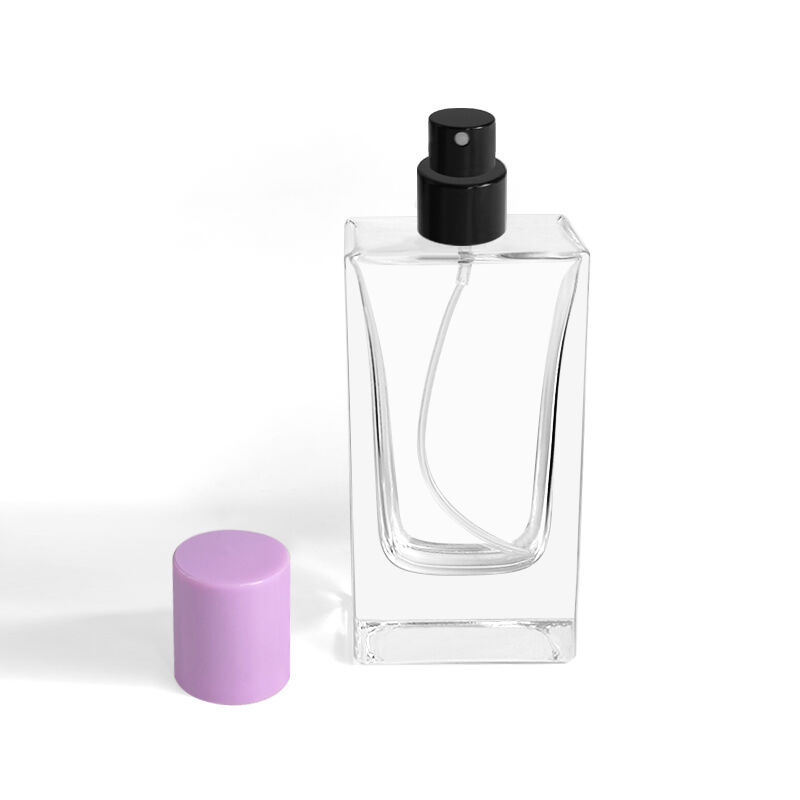
Durability and Structural Integrity of Perfume Bottles
Minimum wall thickness and resistance to breakage during handling and shipping
A perfume bottle must withstand the rigors of logistics without cracking or shattering. Industry standards—including ISO 7458 for glass container strength—specify minimum wall thickness thresholds to ensure impact resistance during transit. Glass walls below 1.5 mm significantly increase breakage risk under standard handling conditions, such as pallet stacking, conveyor movement, and parcel delivery. Manufacturers validate resilience through controlled drop tests (e.g., 1 m onto concrete from three orientations) and vibration simulations replicating road, rail, and air freight. Meeting these benchmarks safeguards product integrity while preserving the refined aesthetic consumers associate with premium fragrance.
Reinforced bases and double-wall construction: balancing strength with elegant design
To enhance structural resilience without compromising visual elegance, designers increasingly adopt reinforced bases and double-wall construction. A thicker base improves stability and reduces tipping risk, while the air gap in double-wall designs increases rigidity without adding bulk—enabling slim, sculptural silhouettes that still feel substantial in hand. This approach satisfies both safety requirements and luxury expectations: the bottle delivers tactile confidence and visual sophistication, reinforcing brand positioning without sacrificing functional performance.
Perceived Luxury: How Glass Thickness Shapes Consumer Perception of Perfume Bottles
Weight, heft, and tactile feedback as subconscious signals of premium quality
The first physical interaction—a shopper lifting a perfume bottle—triggers an immediate, subconscious judgment of value. Heft conveys craftsmanship and permanence; studies in sensory marketing confirm that U.S. and EU consumers consistently associate greater weight with higher perceived quality, often justifying price points between €100 and €300 for bottles offering satisfying density and balance. This tactile impression precedes scent evaluation and anchors the entire unboxing experience. Brands leverage calibrated glass thickness—not merely for durability, but as a deliberate sensory cue—transforming packaging into a tangible expression of exclusivity and care.
Glass Thickness and Fragrance Preservation in Perfume Bottles
Thermal stability and barrier protection against light, heat, and oxygen degradation
Glass thickness plays a quiet but critical role in fragrance preservation by enhancing thermal stability and acting as a physical barrier. Thicker walls serve as thermal mass, dampening rapid temperature shifts that accelerate evaporation of volatile top notes or trigger unwanted chemical reactions. They also reduce oxygen permeability—slowing oxidation and alcohol loss—while denser glass inherently limits UV transmission. When paired with UV-absorbing tinted glass (e.g., amber or cobalt blue), this dual-layer defense protects light-sensitive formulations from photochemical degradation. Thin glass, by contrast, offers minimal insulation or barrier function, risking scent distortion over time. For luxury perfumers committed to olfactory fidelity, optimal thickness is foundational—not decorative.
Manufacturing Precision and Sustainability Trade-offs in Perfume Bottle Design
Uniform thickness as a hallmark of high-precision glass molding and seal reliability
Uniform wall thickness reflects advanced glass molding precision and stringent quality control. Even flow into molds ensures consistent density, eliminating internal stress points that could lead to microfractures during filling or capping. Crucially, uniformity at the neck and shoulder directly impacts seal integrity: precise threading and cap alignment prevent leaks and limit oxygen ingress—key factors in maintaining fragrance stability. Real-time thickness monitoring via laser gauging and high-tolerance mold engineering are now industry benchmarks for luxury brands, where packaging failure is not just a logistical issue, but a reputational one.
Evaluating the 'thicker is better' assumption: cost, weight, recyclability, and carbon impact
While thicker glass enhances heft and perceived luxury, it introduces measurable trade-offs. Increased weight raises raw material use, energy consumption during melting and forming, and transportation emissions—contributing up to 12% more CO₂ per unit compared to optimized lightweight alternatives. Though glass is infinitely recyclable, thicker bottles demand more virgin silica and furnace energy, straining resource efficiency. Advances in precision molding now allow designers to achieve equivalent durability, seal reliability, and tactile satisfaction with up to 20% less glass—without compromising structural or sensory performance. Forward-thinking brands are shifting toward this balanced approach, aligning premium perception with verifiable sustainability commitments.
FAQ Section
Why is glass thickness important in perfume bottles?
Glass thickness ensures durability, provides thermal stability, and protects the fragrance from light, heat, and oxygen degradation, while also conveying a sense of luxury through tactile heft.
How is durability tested in perfume bottles?
Durability is validated through drop tests, vibration simulations, and compliance with industry standards like ISO 7458 for impact resistance.
What are the benefits of reinforced bases in perfume bottles?
Reinforced bases enhance stability, reduce tipping risk, and allow for slim, elegant designs that retain structural strength.
Do thicker glass perfume bottles impact the environment?
Thicker glass increases material use, energy consumption, and CO₂ emissions, though advances in lightweight design can balance luxury perception with sustainability.